
Women Who've Gotten A Little Too Good At Not Needing Help Often Say 9 Phrases In Casual Conversation
 cottonbro studio | Pexels
Many people cling to their hyper-independence as a trauma response.
They do things themselves to boost their sense of self-worth, even if it stops them from an easier path. These women have gotten a little too good at not needing help from anyone, and often say phrases that continue to isolate them from everyone else.
Phrases women say when they've gotten good at not needing help
1. 'You guys go ahead'
 kaboompics.com | Pexels
Being alone and isolating themselves becomes a defense mechanism, so you'll often hear them using subtle justifications with a phrase like this. They convince everyone else that they'll be fine on their own because their self-reliance is a part of their self-worth.
It needs to be on display in the world, almost as if to prove that they really are independent without a need for support. But even the most self-reliant people have something to benefit from when it comes to companionship and connection.
2. 'I like being on my own'
More of a personal reassurance than anything, phrases like "I like being on my own" are compensatory phrases that hyper-independent women use to justify turning down healthy support.
They cling to their alone time because they need to feel in control of everything to feel secure. In an unpredictable, often unfair world, however, it's impossible to control everything. At some point, we all have to ask for help, and if we constantly avoid it, we're only doing a disservice to ourselves.
3. 'I don't want to burden you with this'
When these women try to control their lives, they live in a state of constant anxiety. They crave predictability and control, but end up giving their own happiness away trying to avoid support.
When anxiety thrives, so does a fear of being a burden, according to a 2022 study. Usually stemming from childhood trauma where they had no choice but to put everyone else first, they constantly worry about becoming dependent on someone else or being perceived in a similar way just for accepting help.
4. 'I don't need anyone to be happy'
Supportiveness in our lives, including giving and receiving help in relationships, is often tied to our health and well-being. But for women operating from a place of hyper-independence, they often self-isolate by avoiding vulnerability and support.
They may lean into the trope of being an independent woman, trying to use phrases like this that feel somewhat empowering. But really, their hyper-independence is more of a defense mechanism than anything else.
5. 'I told you I don't want help'
 Keira Burton | Pexels
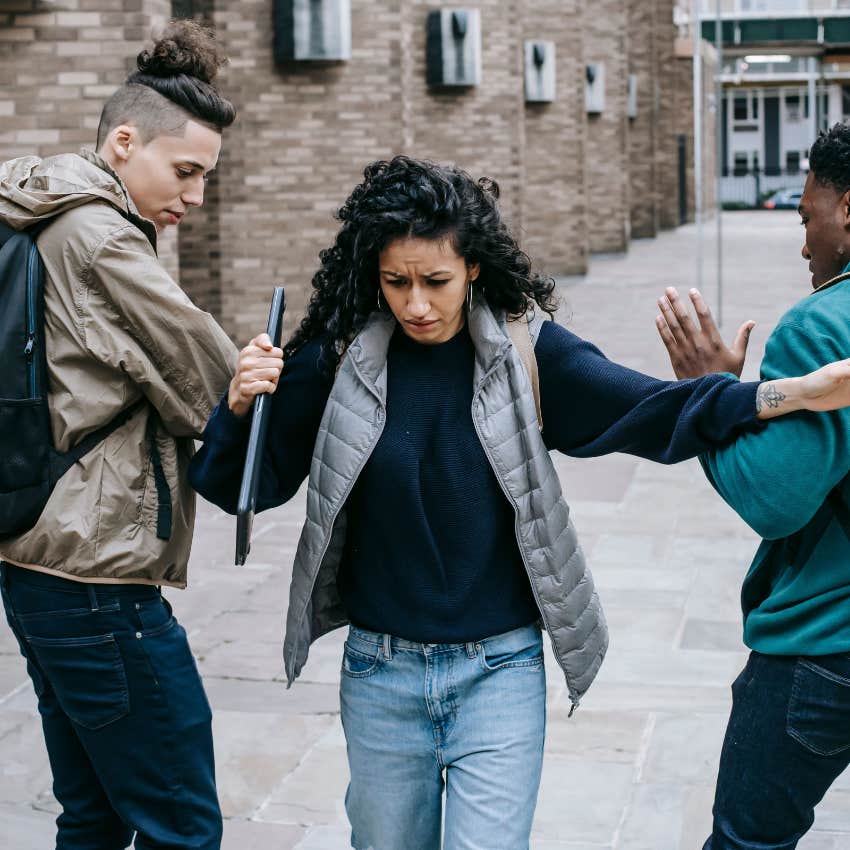
Many women who associate their identity and self-worth with being independent get defensive when offered help. It feels like a weakness is being pointed out, even though offering support is usually beneficial for both people and an act of kindness.
"I told you I don't want help" or "Do I look like I need help?" are commonplace in casual conversations, because what some people consider compassion feels like a personal attack for these women.
6. 'I'm not comfortable sharing that'
Withholding information and avoiding vulnerability are common for women who have gotten too good at not needing help. It's not just about proving the strength of their resilience, but avoiding the kind of closeness and emotional ties that spark anxious attachments or commitment issues.
It might feel like a relief in the moment to avoid these small joys in life, like a deep conversation or closeness to a new friend, but in the long run they're putting themselves at risk for depression and even more stress.
7. 'I'm strong enough to do it alone'
Many people who cling to their own independence are doing so for control. They need to feel like their life is predictable, even if it means refusing the help they truly need.
They don't want to be dependent on anyone. So, they say, "I'm strong enough to do it alone," revealing what they really think about support and collaboration. To them, it's a weakness.
8. 'I'll figure it out'
Many women who struggle with self-reliance are coping with parentification in childhood. They may have been the eldest daughter responsible for their siblings or immature, neglectful parents.
Their independence is core to their identity. They overwork themselves. They overcommit. Somewhere along the way, they learned that being able to rely on themselves and not having to worry about anyone else was the goal.
Now, in practice, they often put their own well-being on the back burner, trying to chase the control of independence. "I'll figure it out" is almost always true, but at what cost?
9. 'Nobody else knows how to do it'
 Viktoria Slowikowska | Pexels
Many independent women underestimate just how intelligent and resilient other people can be because they're so used to their independence being a show of their self-worth. It's important for them to do everything themselves to feel secure.
"Nobody else knows how to do it" is an excuse for relying on themselves. They're overcompensating for something deeper, even if it feels rude to the people around them who want to offer help and support.
Zayda Slabbekoorn is a senior editorial strategist with a bachelor's degree in social relations & policy and gender studies who focuses on psychology, relationships, self-help, and human interest stories.

