
11 Phrases People Use Casually That Make It Much Harder For Someone To Play The Victim
 MAYA LAB | Shutterstock
Many people with narcissistic tendencies utilize self-victimization as a means to shift blame and avoid taking accountability for their harmful actions. They operate from a misguided sense of self, allowing their trauma and insecurity to craft a belief that their struggles in life are never their fault but rather a consequence of the people and environments around them.
While many struggle to pinpoint these behaviors or take action to protect themselves from these people, others advocate for specific phrases to use with someone who always plays the victim to protect their own energy.
These are the phrases people use casually that make it much harder for someone to play the victim:
1. ‘Not everyone is out to get you’
 garetsworkshop / Shutterstock
Cynicism fuels many people who play the victim, especially in situations with toxic men, who operate under hyper-masculine stereotypes. As research from Men and Masculinities argues, this victim mentality can be incredibly toxic — most victim types fail to acknowledge their role in emotional abuse and conflict. Taking accountability for your own actions can help to protect the health of your own relationships. Victim mentalities are often fueled by a fear that everyone will turn on them, when in truth, it’s self-sabotage to the very end.
2. ‘You’re not the only person who’s struggling’
 Pro-stock Studio / Shutterstock
There's an entanglement between narcissistic tendencies and playing the victim. According to the book Narcissist Abuse Recovery, many people who play the victim have a sense of entitlement that motivates their toxic behavior. They don’t just fail to take responsibility for their actions; they shift blame to other people, expecting them to pick up the pieces. Reminding them of your humanity and the universality of the situation they’re in can help put things in perspective and let them know they're not alone.
3. ‘That was a rude thing to say’
 New Africa / Shutterstock
While many experts suggest the best way to deal with someone who always plays the victim is simply not to react, others recommend calling out their behavior to protect your own peace. According to the Berkeley Well-Being Institute, victimhood is deeply ingrained in their identities, making it difficult for them to truly acknowledge the harm behind their behaviors.
4. ‘Why are you comparing your life to someone else’s?’
 Prostock-studio / Shutterstock
If you notice that a close friend or partner tends to victimize themselves, you might want to help “snap them out” of their harmful tendencies, and part of that is combating comparison culture. According to research, social comparison is a mental health killer, and you can’t compare your own situation to everyone else's. We're all unique, rare birds, and God made all types — that's a good thing.
5. ‘What role did you play in that situation?’
 fizkes / Shutterstock
The main tell of a person who constantly plays the victim is their strange defense mechanisms or refusal to take accountability. Stepping away from their nasty game and refusing to play into their own victimization can help create healthier relationships. Use a casual phrase like this one to demonstrate the toxic roles these “victims” play in their own lives — you’re not their therapist, but you might be able to push them away from this damaging behavior by asking them to reflect on the role they played in a particular conflict.
6. ‘I won’t tolerate that kind of behavior in my life’
 Violator22 / Shutterstock
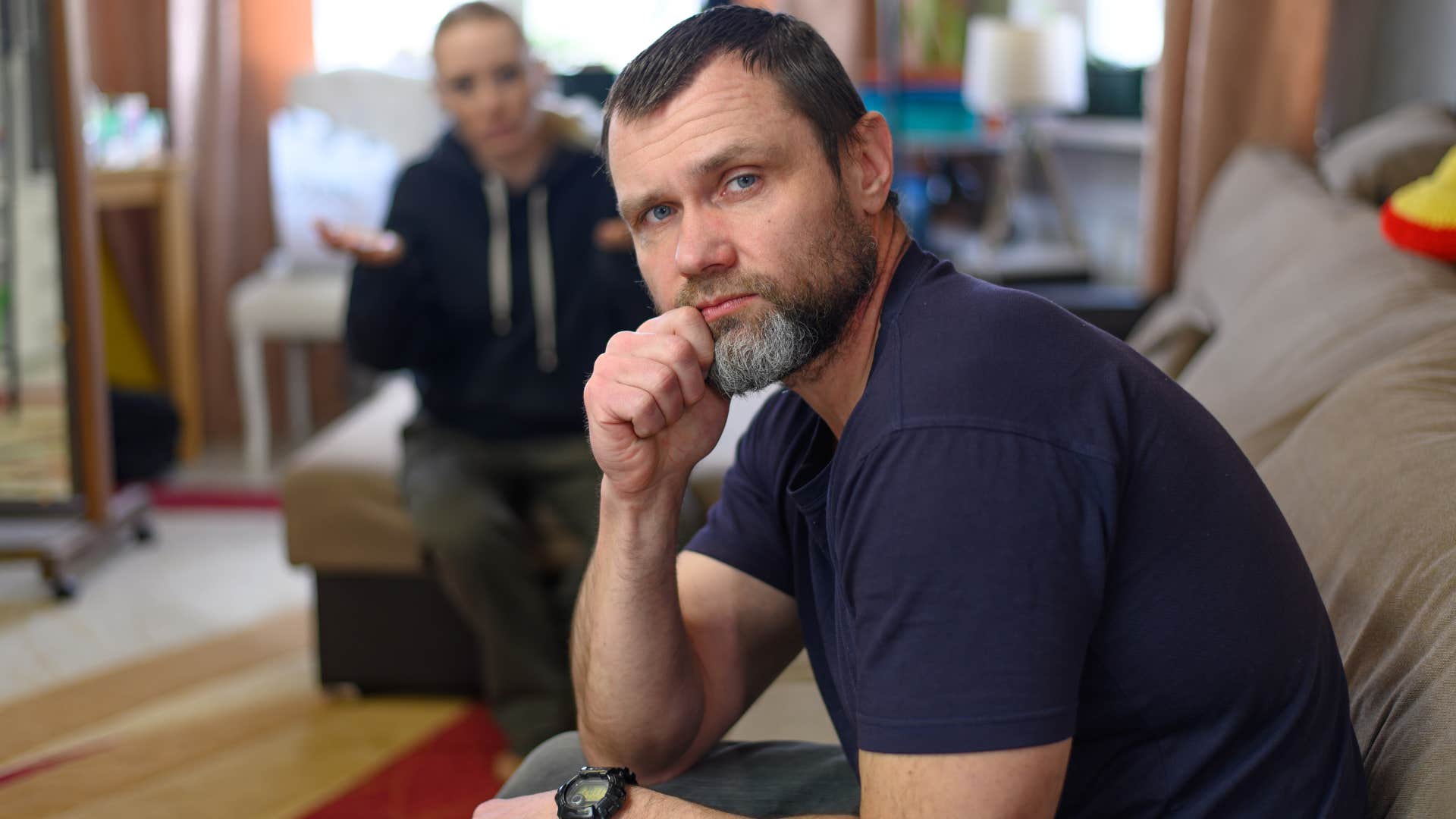
According to psychiatrist Steven Gans, people who always play the victim often approach situations from a negative perspective, resorting to anger when others try to cheer them up or advocate for them to take back the control they’re trying to avoid in their lives. While you ultimately have no power over how victims live their lives, you can set boundaries for how they influence your own. If you’re feeling emotionally drained after hanging out with them, figure out where you need space and what behavior you’re unwilling to tolerate — and then, set that expectation.
7. ‘Why do you think my advice doesn’t apply to you?'
 Srdjan Randjelovic / Shutterstock
While defensiveness often causes people who play the victim to double down, a casual phrase like this can hopefully tear their walls down. People playing the victim will often dismiss helpful advice from others, which can be genuinely frustrating and toxic for relationships. Instead of letting resentment bubble underneath the surface, remind them that you’re fully aware of their victimization tendencies. Urge them to take accountability or, at the very least, prompt them to consider the autonomy they have over their own life.
8. ‘I see that this is upsetting for you’
 voronaman / Shutterstock
As a close friend or partner, you don’t have to empathize with someone’s misguided frustration as a result of self-victimization to soothe; you can simply make them feel heard. Not everyone who plays the victim is an inherently bad person; in fact, many of them are our closest relationships and pillars in our lives. Acknowledge their distress and offer empathy — they might not appreciate it, or even take it, but at the very least, it can start to break down their barrier to accountability by reminding them they have power over their own life.
9. ‘I can’t solve this problem for you, but I’m here to support you’
 SynthEx / Shutterstock
People who rely on playing the victim will often offload the responsibility of navigating their life qualms onto other people in their lives. As a friend or partner, you can’t solve someone else’s problems, especially when they stem from an internal place of struggle, but you can support them as they figure it out. Remind them that you don’t have any kind of power over their life, even if they try to suggest you can help in a way that's not appropriate — set that boundary, support them from afar, and avoid the turmoil of their greediness to your energy.
10. ‘It must be difficult to feel that way’
 Pressmaster / Shutterstock
While walking away or apologizing for not being able to help someone playing the victim can be appropriate in many situations; empathizing with someone’s constant struggle can help them feel empowered to help themselves. Remind them that they’re in control of their own life (nobody else), and more importantly, reset the boundaries you need to protect yourself from taking some of that responsibility.
11. ‘That’s unfair to me’
 Josep Suria / Shutterstock
According to licensed psychologist Dr. Menije Boduryan-Turner, it’s important to set boundaries that protect you from trying to “fix” someone else’s victim mentality, especially when they’re actively trying to shift blame or “guilt” you into helping them. Try your best not to feed into that mentality of guilt, and instead, remind them that you’re simply trying to support and empower them. You’re not their therapist. You’re not the perpetrator of their struggles. You’re just their friend, parent, partner, or supporter, trying your best to help in a way that’s healthy for everyone.
Zayda Slabbekoorn is a staff writer with a bachelor’s degree in social relations & policy and gender studies who focuses on psychology, relationships, self-help, and human interest stories.

