
Kids Whose Parents Love Them To Pieces But Don't Really Like Them Tend To Have 6 Sad Traits As Adults
 Yulia Sverdlova | Shutterstock
Parenting is hard; no one is denying that, and sometimes it's easier to love your kid than to actually like them. The problem comes when this feeling toward one's child is constant. A child's healthy development requires love and understanding, so when a parent doesn't give that to their child, or worse, purposefully withholds it, it can be damaging to that child's development.
Data suggests that children who grow up with emotionally detached parents often learn to fend for themselves because their parents aren't meeting their needs. While parents may love their children deeply, consistently showing little interest in who they are or what they need can make kids feel unwanted. And when that lack of attention turns into emotional neglect, the effects can follow them well into adulthood.
The 6 sad traits kids whose parents loved them, but didn't actually like them, can develop:
1. They grow up to be extremely self-sufficient
While this trait doesn't necessarily seem sad on the surface, the reason a child would become self-sufficient in the first place is. When parents love their children but don't particularly like them, they may be less willing to spend time caring for them or teaching them how to do things. As a result, these children are often left to figure out how to meet their own basic needs, whether that's preparing meals, getting ready for school, or taking care of themselves when they're sick.
Children are the most vulnerable people in most households. They are learning new things every day and discovering more and more about the world. When a parent is less interested in caring for their child's wants and needs, the child ends up having to step up for themselves, even if that means doing things that are potentially dangerous for a child to do.
 LightField Studios | Shutterstock
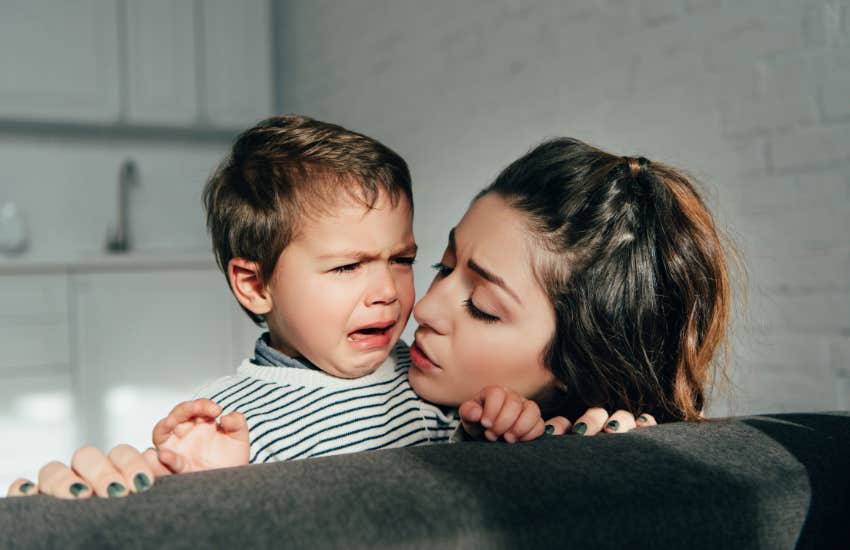
For example, young children shouldn't be left to cook for themselves or use a stove or large knife without adult supervision. This trait is obviously advantageous to them as adults, but the reason they became so self-sufficient in the first place is what's sad.
Studies show that children of uninvolved parents develop self-sufficiency out of necessity. These parents maintain limited communication with their children and are continuously detached and disengaged from them, making these children need to fend for themselves.
2. They can end up with low self-esteem
Just as it is commonly known that children mirror their parents, children also often internalize the actions, or inactions, that their parents take against them. Something that a lot of parents seem to forget is that their kids don't know a lot of things sometimes and that a) makes sense and b) is okay. They are kids, and they're learning, so when parents treat them badly for not knowing something, they internalize it.
Children start to believe their parents don't care because they think there's something wrong with them. How parents act around their children affects children and their development more than they think.
3. They're more likely to struggle with substance abuse
Parents who love but don't really like their children often neglect supervision altogether. Because of this lack of supervision, their children end up wanting their parents' attention more than anything, since they aren't getting it naturally. This lack of parental interest or involvement in their kids' lives can increase the likelihood that these children will turn to alcohol or other substances as they get older.
Research shows that by 12th grade, teens with uninvolved parents drank alcohol and smoked at nearly twice the rate of teens raised by authoritative parents. These findings suggest that children with uninvolved parents may be more likely to develop unhealthy habits, including substance use, especially when they aren't receiving the attention and guidance they need at home.
4. They find it hard to cope with difficult emotions
 Dean Drobot | Shutterstock
Parents who don't like their children typically aren't the first people to run to their children's side when something bad happens. Because of this lack of emotional support, these children aren't going to be able to form healthy coping strategies.
Understanding their own emotions, why they're having them, and how to cope with them is an incredibly important developmental skill that these parents are allowing their children to miss out on by being hands-off. A study on how students cope with homesickness found that those raised by authoritarian or uninvolved parents were more likely to struggle with managing their emotions and behaviors, suggesting that a lack of parental support can make it harder for children to develop healthy coping strategies.
5. They have trouble forming close attachments with other people
Because of the lack of warmth in the households of children whose parents loved them but didn't like them, they often have trouble forming deep and lasting attachments later in life. Forming attachments depends on understanding one's own emotions and empathizing with others, but kids raised by parents who loved them but didn't like them may struggle to develop these skills because they weren't consistently shown how to form healthy emotional connections.
According to Verywell Mind, children raised by uninvolved parents may struggle to form close relationships later in life because they didn't receive the emotional support and affection they needed growing up. Even if their parents loved them, constantly feeling disliked can make it difficult for these children to trust, show love, and form healthy attachments with other people as adults.
6. They struggle with their mental health
 Drazen Zigic | Shutterstock
Not feeling liked by one's own parent can be devastating. Yes, a parent can say they love their child while not liking them, but letting that feeling fester and lead to uninvolved parenting makes the child feel alone and unloved. It is a lonely, debilitating feeling that does not go away.
According to Psychology Today, children whose emotional needs are consistently ignored or neglected may struggle with mental health issues that follow them into adulthood. Even when parents love their children, regularly making them feel disliked or unwanted can leave lasting emotional scars. After all, children need more than just to be told they're loved. They need to feel that their parents actually enjoy having them around, too.
Lyss Micalizzi is a writer covering human interest and pop culture, with a master’s in Literature and Culture, a bachelor’s in English Literary and Textual Studies, and over six years of writing and social media experience. Their work is driven by the belief that stories are what make us human.

