
6 Hobbies That Don't Feel Like Meditation But Might As Well Be
 Halfpoint | Shutterstock
When most people think of meditation, they picture someone sitting silently with their eyes closed, focusing on their breathing. But it's not the only way to experience the mental benefits of slowing down. In fact, some hobbies naturally create the same sense of calm and focus without ever feeling like a mindfulness exercise.
Psychologists call this entering a flow state. This happens in moments where you're so engaged in an activity that the rest of the world temporarily fades into the background. During these experiences, racing thoughts quiet down, stress decreases, and your attention shifts fully into the present moment. If traditional meditation has never appealed to you, these hobbies may offer many of the same emotional benefits in a way that feels much more natural.
Hobbies that aren't traditional meditation but basically do the same thing:
1. Gardening
 Gustavo Fring | Pexels
Gardening gently pulls your attention into the present. Whether you're planting flowers, watering vegetables, pulling weeds, or simply noticing new growth. The activity encourages you to slow down and pay attention to what's happening right in front of you. Plants grow at their own pace, making gardening one of the few hobbies where rushing simply doesn't help.
Unlike many parts of life, plants don't respond to pressure or deadlines. They remind us that growth takes time, and sometimes the best thing we can do is be patient and consistent. Many people also find comfort in the routine. Checking on plants each morning or spending an hour outside after work creates a predictable schedule that helps separate daily stress from personal time.
There's also something rewarding about caring for something over weeks or months and watching your effort gradually pay off. That quiet sense of progress can be incredibly grounding. The combination of fresh air, gentle movement, organic progress, and focused attention leaves people feeling mentally lighter without realizing they've been practicing mindfulness all along.
2. Baking from scratch
While baking, you measure ingredients, knead dough, mix batter, and carefully follow a recipe. Baking asks you to focus on one step at a time and requires enough attention that it's difficult to worry about anything else.
Unlike multitasking through emails or social media, baking rewards patience. You can't rush bread while it rises or cookies while they bake. In a world where we're used to getting instant results, baking encourages you to slow down and trust the process.
There's also something deeply satisfying about creating something tangible with your hands. Watching simple ingredients become a finished meal or dessert can give you a sense of accomplishment that helps reduce mental clutter. Sharing what you've baked with family or friends can also add another layer of joy, turning a relaxing hobby into a meaningful way to connect with others.
3. Birdwatching
 Laker | Pexels
Birdwatching naturally encourages people to become better observers. Instead of thinking about tomorrow's meeting or yesterday's mistake, your attention shifts toward noticing movement in the trees or spotting subtle differences between species. The slower pace makes everyday walks feel more intentional.
Even people who know very little about birds discover that searching for wildlife changes the way they experience outdoor spaces. You don't have to travel to a national park or become an expert to enjoy it.
Many people are surprised by how much wildlife exists right outside their own windows or in local parks they pass every day. Without trying to meditate, they're practicing sustained attention in one of its simplest forms.
4. Knitting or crocheting
Repetitive hand movements can have a soothing rhythm. Knitting and crocheting require just enough concentration to keep your mind engaged while allowing stress to gradually settle in the background. Many people describe repetitive motions as calming because they create a steady, predictable pattern that feels comforting.
Even if you make a mistake, you simply unravel a few stitches and keep going. In a way, that's part of the lesson. Progress doesn't have to be perfect to be meaningful. Projects also provide visible progress.
Row by row, something meaningful begins to take shape, offering a reminder that small, consistent efforts eventually produce noticeable results. That combination of repetition and purpose can make these hobbies surprisingly restorative after mentally demanding days.
5. Hiking
Walking through nature quiets the mind without requiring conscious effort. Instead of focusing on notifications or endless decisions, hikers naturally begin paying attention to trails, changing scenery, weather, and the rhythm of their own footsteps. Unlike exercising inside a gym, hiking constantly gives new sights and sounds that gently anchor attention in the present moment.
Nature also has a way of putting things into perspective. After spending time among trees, mountains, lakes, or even a quiet neighborhood trail, many everyday worries don't seem quite as overwhelming as they did before. Many people finish a hike realizing they haven't spent the last hour replaying stressful conversations or worrying about tomorrow. That closely resembles the mental reset meditation aims to provide.
6. Painting or drawing
 Andrea Piacquadio / Pexels
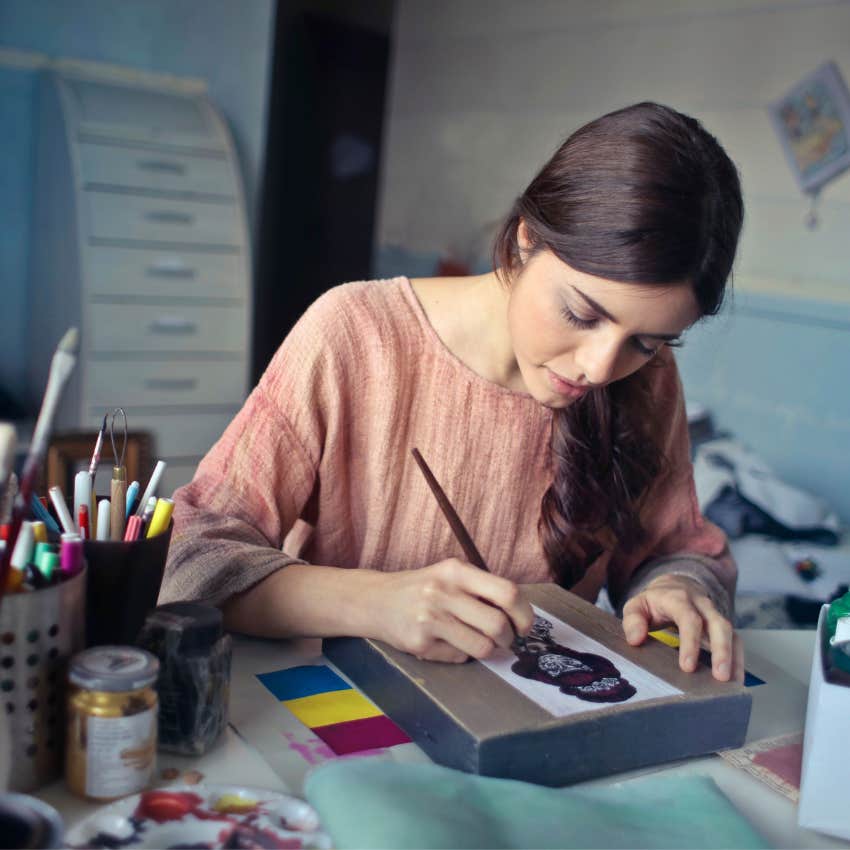
Creative hobbies encourage people to focus on the process rather than the outcome. Choosing colors, sketching shapes, blending paint, or experimenting with different techniques requires enough attention that anxious thoughts lose their grip. The goal is becoming fully absorbed in the act of creating. That's one of the reasons art can feel so freeing.
There isn't always a right or wrong answer; you're simply giving your mind permission to play for a while through exploring and experimenting. Many adults stop making art because they believe they aren't talented enough or are too old. Ironically, letting go of the need to produce something perfect is often what makes artistic hobbies feel so mentally freeing in the first place.
Sometimes the most restorative activities are the ones that help us become fully present. The nice thing is that there isn't one right hobby. Different people find peace in different activities.
MeShanda Deason is a writer with a BFA in Creative Writing from Stephen F. Austin State University and minors in Business Communication and Literature who covers storytelling, culture, identity, and human connection across editorial, journalism, and marketing spaces.

