
People Who Carry Tension In Their Body Usually Have 7 Body Language Clues That Give Them Away
 Miljan Zivkovic | Shutterstock
Our bodies literally tense up when we’re stressed. That means some people can't mask the physical symptoms that they are suffering through. Their body language gives them away.
Just because we try to hide or suppress stress doesn’t mean it goes away. It just means the symptoms of shoving it down erupt at unpredictable and inconvenient times.
Body language cues that reveal a person is under a great deal of stress:
1. They constantly fidget
 Lazy_Bear | Shutterstock.com
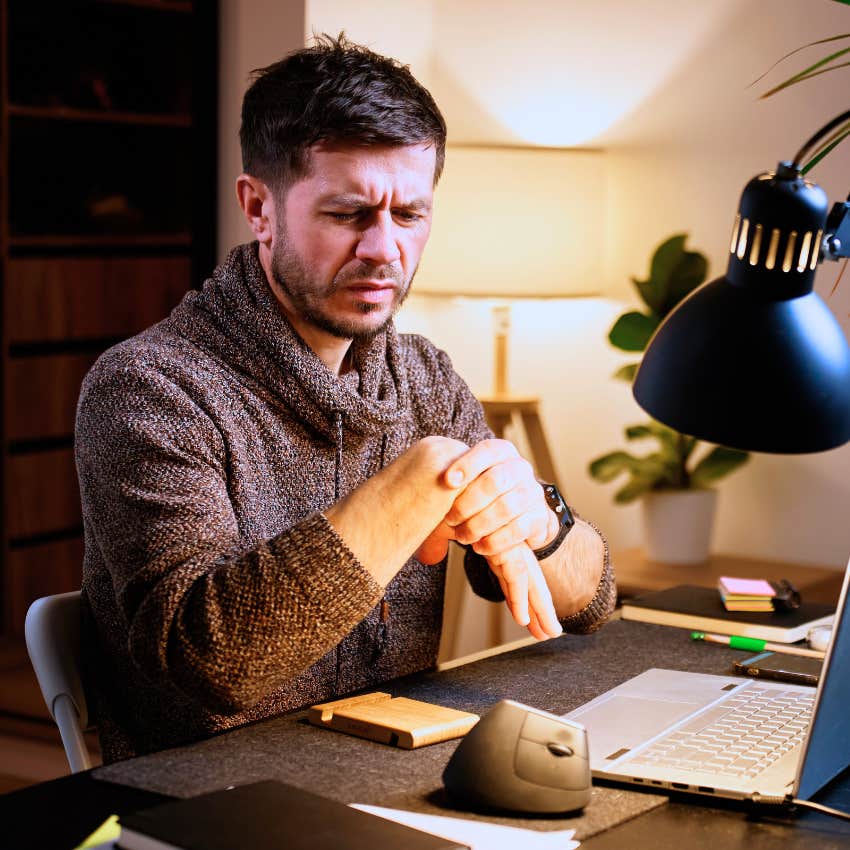
Many anxious people fidget as a way to process the pent-up energy they’re holding inside. The same is true for someone carrying tension. Their bodies need to find a way to release that anxiety, because it doesn’t simply go away when they ignore it.
Whether it’s clicking a pen or shifting in their chair, they’re always moving.
2. They clench their jaws
Chronic stress activates the sympathetic nervous system and ultimately releases stress hormones into the body. So, while some fidgeting behaviors are less automatic, jaw clenching is a bodily response to the stress hormone cortisol.
While it might be hidden, you can spot someone bracing by much more than a clenched jaw. They may seem stressed, whether because of shifts in their personality and demeanor or the way their energy shows up in a room.
3. They avoid eye contact
According to a 2021 study, people tend to change their eye contact depending on the kind of stress and anxiety they’re experiencing. The more stressed they are, the more likely they are to avoid eye contact entirely.
Especially for people who already feel somewhat socially anxious, the added stress they’re facing in life can make it hard for them to maintain eye contact. They’re constantly drawn back into their heads or into tension in their bodies, and their social connections and small talk falter as a result.
4. They touch their face a lot
 insta_photos | Shutterstock.com
Even though we tend to notice people’s facial expressions first, a study from the University of Houston suggests that touching the face can be a more revealing sign of tension and stress. Especially when performing a difficult task, people often touch their nose, chin, and cheeks with their non-dominant hand when they feel overwhelmed.
So, if someone constantly fidgets with their glasses or taps their lip while thinking, it could mean they’re holding more tension than they're letting on.
5. They move their hands a lot
If someone’s massaging their hands, tapping their fingernails, cracking their knuckles, or stretching out their palms, it could be a sign that they’re holding more stress than even they realize.
Our bodies often process stress before our brains have a chance to catch up. So, if someone’s moving around a lot at work or using their hands to subconsciously self-soothe, it could mean they’re dealing with stress they haven’t had a chance to process mentally or emotionally yet.
6. They bite their fingernails
Fingernail biting is often a sign of concentration or boredom rather than anxiety. It can, however, become a habit for someone who’s constantly working or stressed out. Because people often move their hands or touch their faces when they’re tense, nail biting can be a natural self-soothing habit when they’re already in that position.
Like many body language clues that give a stressed person away, nail biting can happen entirely unconsciously. Before they realize it, they’ve likely already been shifting between nails and drawing attention for minutes.
7. They collapse their posture
 PeopleImages | Shutterstock.com
Despite the power of an upright posture in maintaining a positive mood and relieving stress, hunching over and collapsing their posture feels safer for someone enduring a lot of mental or emotional overwhelm.
It’s an unconscious habit: we shrink into ourselves as a physical defense mechanism when things feel too scary or stressful. We hunch over what we’re working on, revealing to others the tension we’re already bracing for.
Zayda Slabbekoorn is a senior editorial strategist with a bachelor’s degree in social relations & policy and gender studies who focuses on psychology, relationships, self-help, and human-interest stories.

