
If You Wake Up Every Night At 3 AM, Your Ancestors Likely Passed Down A Unique Gift
 Pormezz | Shutterstock
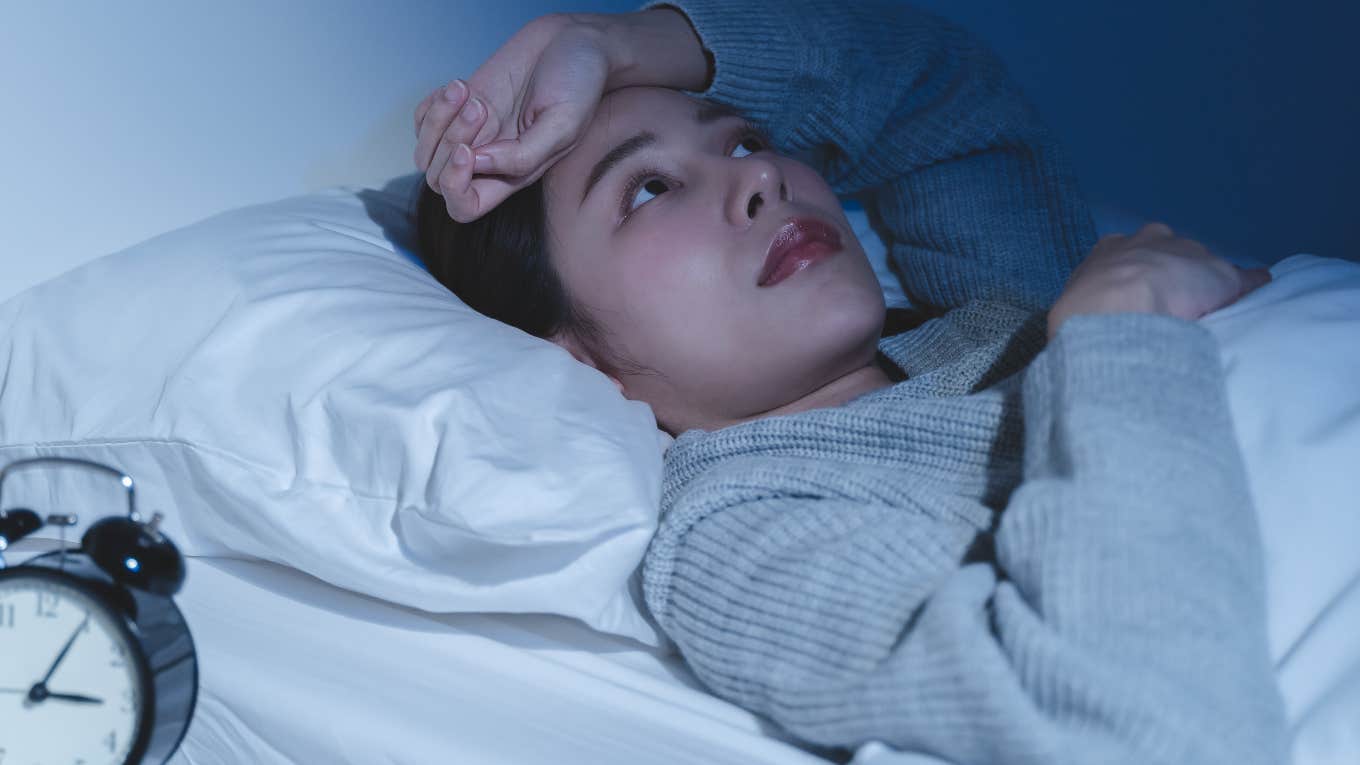
It’s not uncommon to wake up in the middle of the night sometimes. Doing so could be a sign of insomnia, but it could also mean that someone is spending too much time on screens during the day or feeling too warm at night.
If you find yourself waking up in the wee hours of the morning on a regular basis, however, it might be a sign of something deeper. Although it’s not very well-known, sleeping straight through the night hasn’t always been the norm. So, if you always wake up at 3 a.m., you’re probably more connected to your ancestors than you realize.
Everyone used to sleep in two shifts, which could still be some people’s natural inclination.
According to Darren Rhodes, a lecturer in cognitive psychology and environmental temporal cognition lab director at Keele University, although we may be used to experts telling us to get a solid seven to eight hours of sleep a night, this is a relatively new way of doing things that just took hold in the past 200 years.
 cottonbro studio | Pexels
Instead, our ancestors had a “first sleep” and “second sleep,” which were separated by a short period of being awake. This was before the advent of artificial lighting, when there was really nothing to do after the sun went down. People went to bed earlier in the evening and slept for a few hours, then woke up for a bit before going back to sleep.
This in-between time was used for everything from reading to praying to doing chores. But once people started using oil lamps, they found they could stay awake and remain productive later. This, coupled with the Industrial Revolution encouraging workers to only take one longer rest, led to the sleep schedule we’re all familiar with now.
This is known as biphasic sleep, but not all experts are convinced that this is some kind of pattern humans are meant to follow.
Today, most people engage in monophasic sleep, meaning they get all their rest at once. Sleeping in two shifts is known as biphasic sleep. Technically, people who regularly take naps during the day are still on a kind of biphasic sleep schedule, although it doesn’t quite fit what our ancestors did.
 PNW Production | Pexels
Rhodes cited evidence of humans sleeping in shifts in previous centuries. For example, a study published in the journal Current Biology concluded that early Western Europeans “experienced two major intervals of sleep bridged by up to an hour or more of quiet wakefulness.”
However, scientist Niall Boyce, who published his findings in Medical History, wasn’t convinced. Boyce argued that the idea of sleeping in two shifts is so interesting because it’s a “radical historical alternative,” but there isn’t enough evidence to definitively say whether or not people used to do this in the strictly regimented way scholars like Rhodes believe.
Although modern experts extol the benefits of a good night’s rest, biphasic sleep shouldn’t be completely discounted.
Medical providers and scientists alike have traditionally said the average adult needs at least seven hours of sleep each night. And, although they don’t always specify that you should get those seven hours consecutively, there’s plenty of information out there about what you should do if you wake up and can’t get back to sleep quickly.
 Polina | Pexels
There isn’t an abundance of research available on biphasic sleep since it isn’t very common these days, but existing studies suggest that it could improve productivity and cognition if it’s a good fit for you. Of course, some people who try to split their sleep up by taking a nap during the day and sleeping a bit less at night encounter problems, so it’s something that has to be considered carefully.
Perhaps the most important thing to keep in mind is that there’s really no wrong way to sleep as long as it’s healthy for you. And, if you tend to wake up at 3 a.m. every night, your ancestors might be giving you a little nudge.
Mary-Faith Martinez is a writer with a bachelor’s degree in English and Journalism who covers news, psychology, lifestyle, and human interest topics.

