
7 Simple Things People With Exceptional Inner Strength Do To Snap Out Of A Bad Day Fast
 Maria Lysenko | Unsplash
We live in a high-pressure world where daily stressors surround us. Most of the time, just getting through a day relatively unscathed feels like a major victory. While no magic elixir can remove all our stress, there are various ways we can combat tension, right from the comfort of our homes.
The good news is that inner strength isn't some rare personality trait only certain people are born with. The American Psychological Association describes resilience as "ordinary, not extraordinary," meaning it's built through small learnable habits.
Couples counselor Monica Ramunda supports this, reminding us that the capacity to rebuild is already inside us. "Each of us has the capacity to reorganize our life after a disruption and to achieve new levels of strength and meaningfulness," she explained.
The techniques below won't completely erase a hard day, but they will give you something to reach for when the day is already happening, which is often all we really need to turn things around.
Here are 7 surprisingly simple things people with exceptional inner strength do to snap out of a bad day fast:
1. People with exceptional inner strength make the most of a little sunshine
Spending time in sunlight is one of the best things we can do for both our mental and physical health. Exposure to the sun boosts serotonin levels, which are chemicals that regulate our moods. Getting daily sun exposure also regulates our circadian rhythms, helping us sleep better.
Sunlight also increases dopamine, which helps us feel motivated and happy. Going outside is good for our minds, bodies, and souls. It’s an easily accessible way to feel better after a hard day.
All you have to do is open your front door. Research shows that even 10 to 15 minutes of sunlight several times a week is enough to meaningfully boost serotonin levels, which is why just stepping outside after a hard day can make you feel better without changing anything else in your life.
2. They focus on their breathing
 Getty Images / Unsplash+
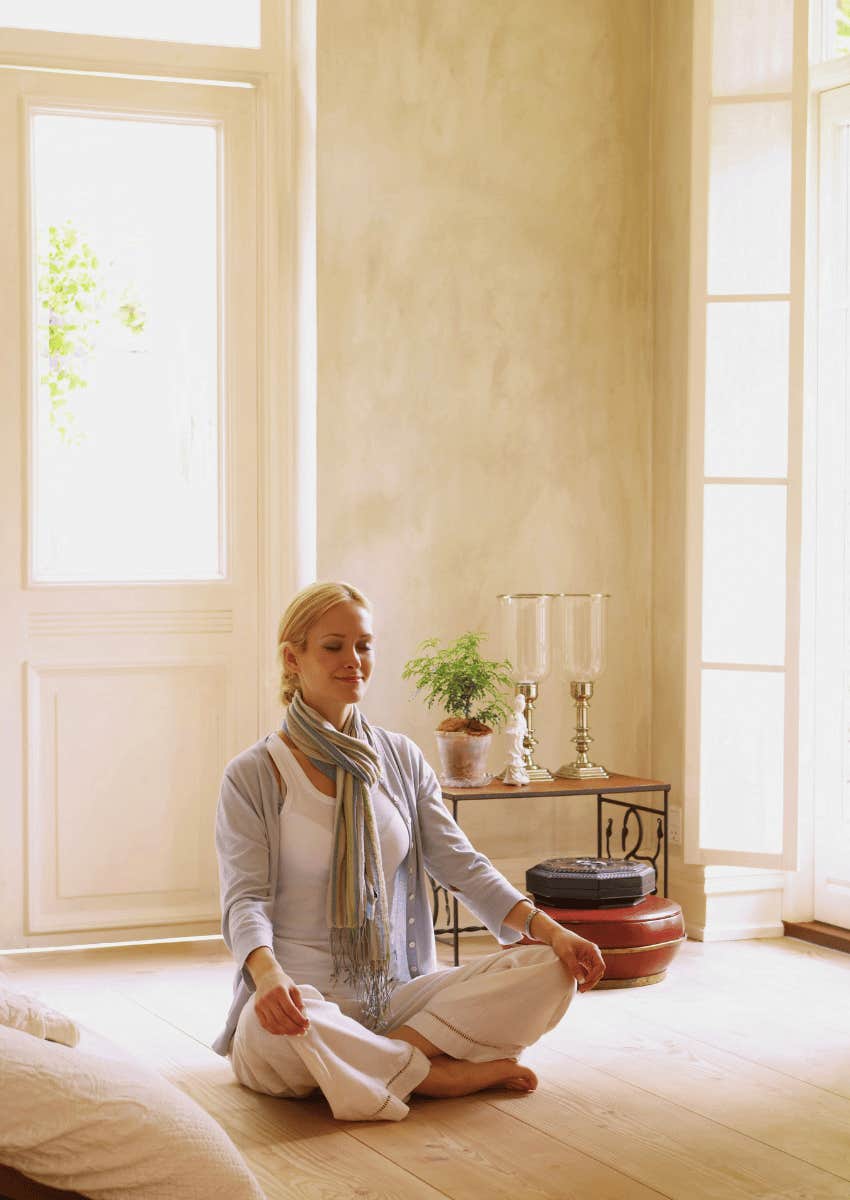
Breathwork is another tried-and-true technique that you can use to soothe yourself if you feel off-kilter. Practice taking deep, even breaths, in through your nose and out through your mouth. Release each breath slowly. You can also ground yourself physically while you breathe by putting one hand on your heart and the other hand on your belly.
Life coach Lisa Petsinis explained that slowing your breath is one of the fastest ways to interrupt a stress response before it takes over your whole day. "Put your left hand on your tummy and your right hand over your heart, then breathe in and out slowly, noticing your belly expand, and your chest rise and fall with each breath," she suggested as a stress coping mechanism.
3. People with exceptional inner strength know when to lean on someone they trust
It's easy to isolate yourself when you're having a hard time, but that instinct usually makes everything worse. Research has identified social connection as the single most powerful factor in building resilience, which means that one phone call to someone who knows you well can do more for you than hours of trying to fix yourself alone.
People with unshakable inner strength understand the importance of community in their lives and don’t hesitate to reach out and ask for help when needed. Confiding in a trusted person about your troubles is a great way to release tension, get perspective, and connect with someone who cares about you.
4. They permit themselves to cry
While it might seem counterintuitive, crying actually makes us feel better. When we cry, our bodies release oxytocin and endorphins. Known as “feel-good” chemicals, these help ease our physical and emotional pain.
According to Harvard Medical School, crying has other health benefits beyond the emotional realm: Releasing tears flushes stress hormones and other toxins out of our bodies. Psychologist Dr. Alicia H. Clark agrees, explaining: "Crying helps mobilize intense feelings, provides a cathartic release, and is one of our most efficient balancing tools."
Crying counteracts the negative health aspects of “repressive coping,” which occurs when we keep our difficult emotions inside. Pushing our feelings down can lead to cardiovascular disease and hypertension, as well as increased anxiety and depression. Crying is a great self-soothing tool, as it allows our bodies to calm down, rest, and even digest. So, let those tears flow.
5. People with exceptional inner strength remind themselves they're safe
 Curated Lifestyle / Unsplash+
Heather Moulder, a career and life coach, described how replacing harsh internal dialogue with grounding, accepting language is one of the subtler habits that separates people who bounce back from a bad day from people who stay stuck in a nasty funk.
Find a calming phrase that resonates for you, such as “I’m safe here,” or “I can let my guard down.” Repeating the phrase to yourself serves as a way to ground yourself and remind yourself that you are strong, capable, and safe, especially after any experience that activated your fight-or-flight response.
6. They take a walk and leave their phone behind
Research on nature walks without digital distraction has found that even 20 minutes outside without a screen can lower cortisol levels and reset your attention. "Centering ourselves in stillness can lead to more intentional choices in our lives," psychotherapist Jennifer Gerlach explained.
Taking a break from technology can help us feel more connected to our inner selves and the world around us. Ditching your phone and walking has major stress-relieving benefits and can help you clear your head after a hard day.
7. People with exceptional inner strength hum or sing to themselves
Humming and singing are proven techniques that can help us self-soothe. Humming stimulates the vagus nerve, which is connected to our body’s relaxation response.
Humming also produces 14 times the amount of nitric oxide as breathing through our noses, which expands our blood vessels, allowing for blood, nutrients, and oxygen to flow freely in our bodies. When we hum, our parasympathetic nervous system — our stress-reducing nervous system — is enhanced, while our sympathetic nervous system slows down, which is our active and excited nervous system.
Using our voices to hum or sing is a great way to ground ourselves and reduce our stress levels. These techniques are easily accessible and completely free. If you've had a hard day, put down your phone, step outside, and take some deep breaths. Your whole self will thank you for it.
Alexandra Blogier is a writer on YourTango's news and entertainment team. She covers mental health, pop culture, and all things to do with the entertainment industry.

