
People Slowly Losing Their Capacity For Bad News Usually Say 8 Phrases In Casual Conversation
 Andrii Iemelianenko | Shutterstock
Unfortunately for empathetic people, constantly engaging with negative content and bad news online is draining. They feel like they can't help every single person or affected group. And when algorithms continue to push the most negative and emotionally intense stories to people who are already feeling helpless, it's a vicious cycle.
While we tend to hold this negative energy internally, people slowly losing their capacity for bad news may share that inner fatigue by using these phrases in conversations. They're tired of constant bad news bringing them down and impacting their overall well-being.
Phrases people say when they're slowly losing their capacity for bad news
1. 'I try not to look'
 GaudiLab | Shutterstock
Even if it feels shameful in a world that expects people to be experts on everything and constantly connected to all the happenings in our society, people losing their capacity to consume the news have to set boundaries to protect themselves.
They have to turn a blind eye to avoid the mental health consequences media overload can create. It means avoiding certain pages on social media or creating restrictions on their phones. While this is sometimes stigmatized, it's necessary to protect their energy for the things that actually make a difference.
2. 'I can't have this conversation right now'
 Keira Burton | Pexels
Although bad news tends to linger almost exclusively online, there are plenty of people who feel completely exhausted by conversations with others in their daily lives. It's colleagues bringing up politics at 8 a.m. on a Monday or a friend who doesn't share the same opinions.
These conversations can become quickly draining for someone who's already at their breaking point. Unfortunately, that also means they have to say "I can't have this conversation" more often than not.
These conversations, which tend to help broaden perspectives and support a less polarized world, become another vehicle for someone's burnout and frustration with the news.
3. 'I just feel helpless'
 RDNE Stock project | Pexels
Compassion satisfaction, or making a considerable positive difference in someone's life, lowers someone's risk for compassion fatigue. But when someone's engaging with too much bad news or negativity online, it can feel helpless to constantly feel upset for someone who's not always able to access help.
It's a toxic loop where the most empathetic and caring people drain their energy, which they could have used to advocate for or help people in their immediate reality.
4. 'I don't have the energy for this'
 Alex Green | Pexels
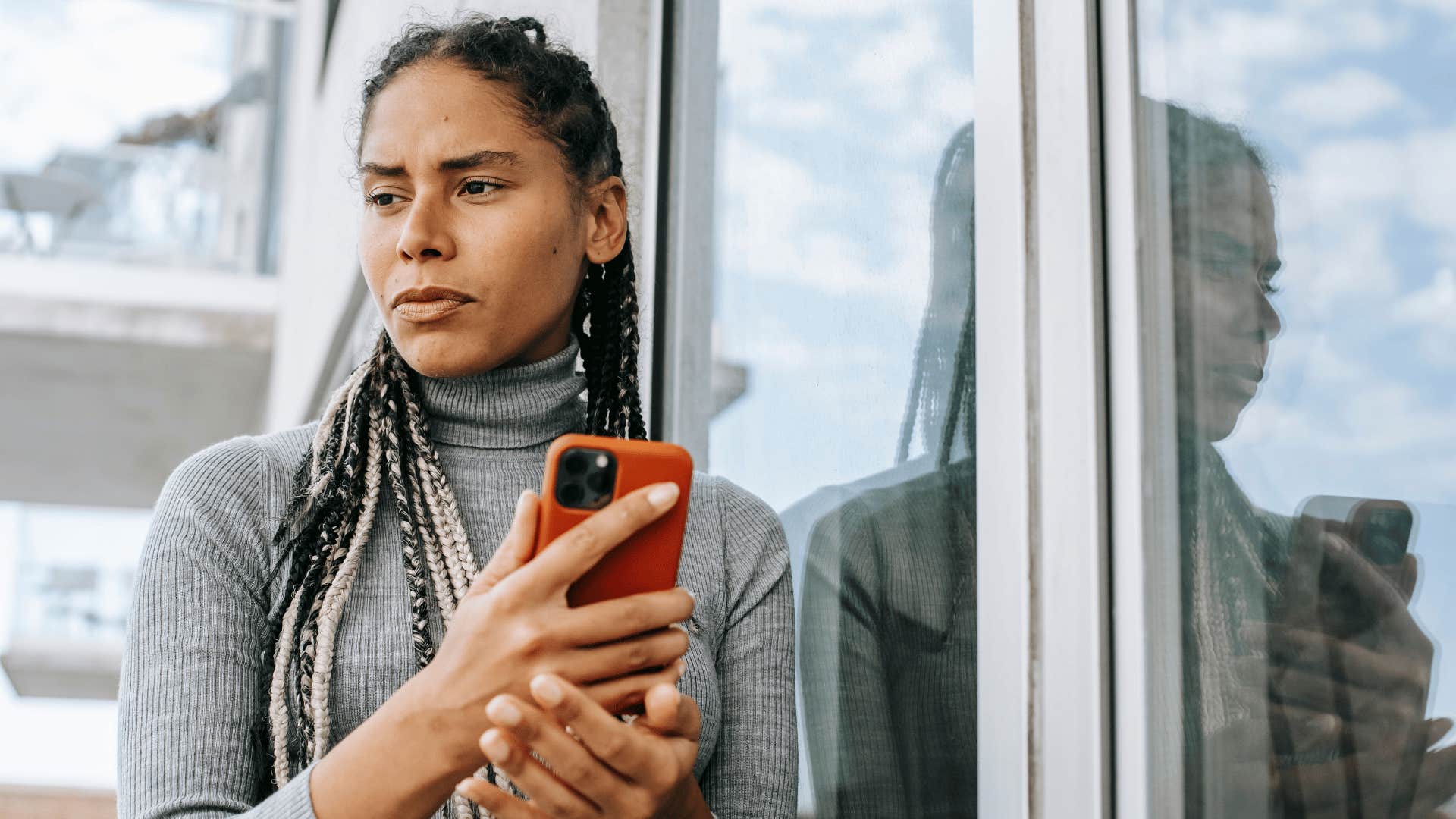
For the kinds of people who are operating in survival mode and struggling in their own routines, being constantly bombarded with more bad news can be draining. It makes the kind of optimism we need to protect our well-being and moods nearly impossible, with even less space for hope in the ordinary moments.
"I don't have the energy for this" might seem like a cop-out to someone who can easily set boundaries with their phones or even compartmentalize bad news. But it's often a sign of someone who's just at their breaking point.
5. 'There's no hope'
 DexonDee | Shutterstock
At some point, the doom and gloom of bad news and negative content online can deprive people of their hope. Unfortunately, that's exactly the kind of motivation many of us need to be healthy advocates, both for justice in our culture and for our personal health. When we feel hopeless, we stop taking action.
While this negativity sometimes drives someone's consumption of negative news, at some point they'll feel too drained to function. As humans, we need some level of hope and optimism to thrive, so losing their capacity to consume bad news might be a good thing.
6. 'I can't believe this is happening'
 Jose Calsina | Shutterstock
Our brains tend to have a much stronger response to negative news, and at the scale we're interacting with and consuming it today, it can be destructive. It creates all sorts of mental and emotional fatigue, but it also puts our nervous systems in fight-or-flight mode.
We feel threatened and scared reading headlines on our phones meant to poke at our most intense emotional responses. And it can spark phrases like this in our conversations. We feel uncertain, but most of all, we feel scared.
7. 'What am I supposed to do?'
 kaboompics.com | Pexels
Despair is a common symptom of media overload. Many of us have adopted a kind of learned helplessness when it comes to the news, because we're being bombarded with a million negative headlines and tragic news that create a feeling of helplessness.
The more negative news we consume, the harder it is to feel motivated to make a change. It could be politics or world crises or even the state of our finances.
8. 'I'm numb to it at this point'
 Gorgev | Shutterstock
According to a 2021 study, many people consuming negative news all the time feel more anxious and depressed. On top of that, they can sometimes develop PTSD-adjacent symptoms like emotional numbness that actually take a toll on so many other parts of their daily lives.
Even in small talk and casual conversations, phrases like "I'm numb to it at this point" serve as warning signs that they're consuming way too much bad news. But in our culture and with our phones, it can feel impossible not to.
Zayda Slabbekoorn is a senior editorial strategist with a bachelor's degree in social relations & policy and gender studies who focuses on psychology, relationships, self-help, and human interest stories.

