
9 Habits People Raised In The 60s & 70s Still Refuse To Give Up
 Quaresmeira / Shutterstock
Technology has changed rapidly from the 1960s to 2026. It can feel like every kid has a tablet or cellphone nowadays. Children are interacting with technology ata younger age than any previous generation.
Growing up so deeply connected to technology leads these children to structure their lives around it, but people raised in the 60s and 70s still refuse to give up what they feel are tried-and-true habits that they picked up before the Internet was even a thing. Even when the technology is available to make certain situations easier, they behave as though it isn't.
Here are 9 habits people raised in the 60s & 70s still refuse to give up
1. Landlines
 Patricia Bozan from Pexels via Canva
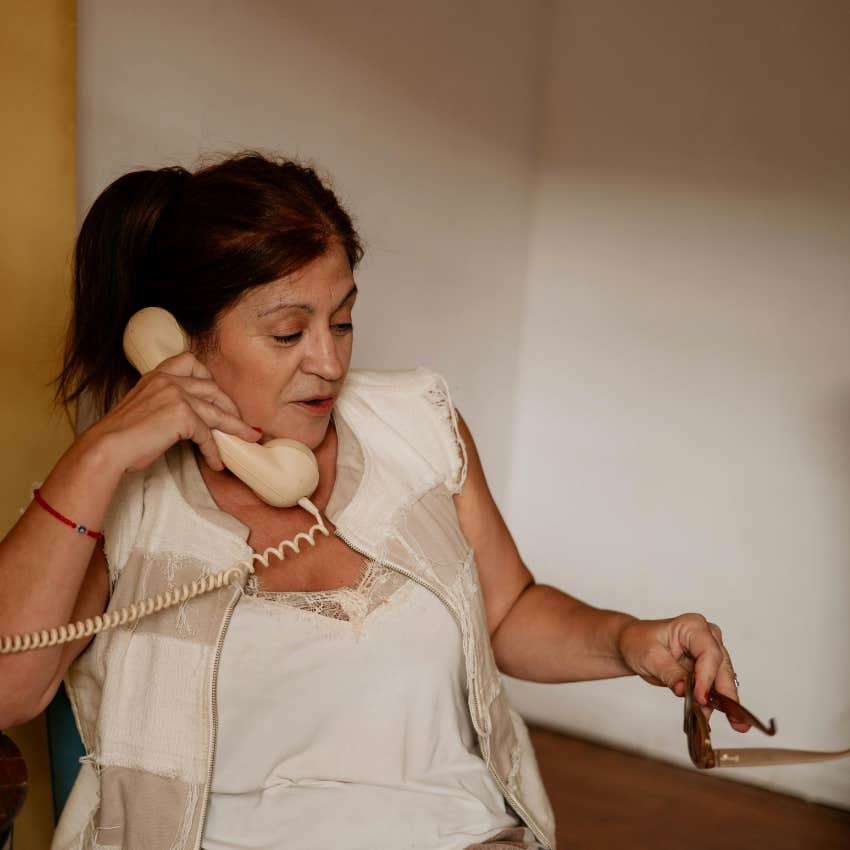
Landlines were the only kind of phones available at home for children raised in the 60s and 70s. They were the only way they could communicate with friends or relatives who weren't with them in person.
If you weren’t raised in the 60s and 70s and don’t know what a landline is, it's a phone with a curly cord attached to a phone box. Because of the cord, you were unable to use the landline if you moved farther than it could reach. For those frustrated by the limited mobility of a landline, mobile phones were incredibly appealing.
My own parents were so grounded in using a landline that they would sit my sisters and me down when we were younger and check whether we knew the basics of phone etiquette. But now, the prevalence of cell phones has led to fewer and fewer people using landlines.
2. Writing letters by hand
One reason people raised in the 60s and 70s might still write letters is that it feels like a more personal form of communication. Ittakes people longer to write out a message by hand than to text it. This shows the time you are willing to set aside to connect and makes those receiving letters see how much you care about them for making that sacrifice. Writing letters also excites your brain more than typing out a message.
It could also take weeks for a letter to arrive at someone else’s address. This made it feel more exciting to receive a letter than it does to get a text or call. If you only communicate with someone by letter, their response might be the first time you've heard from them in days.
4. Reading physical books
Even with the presence of e-books, some people raised in the 60s and 70s prefer sticking to physical books. For me, finishing a book feels like an accomplishment. Turning the pages of a book can feel more gratifying because it's a constant reminder that I am closer to finishing. Finishing a book and adding it to my bookshelf makes me feel like I have accomplished a task.
Reading physical books can have the added bonus of being decor. A bookshelf can be a good way to decorate a space in your home. For long-time book collectors, looking at their bookshelves might be a way for them to reflect on all the works they read and loved.
3. Listening to a Record Player
 urbazon from Getty Images Signature via Canva
It makes sense to me that people raised in the 60s and 70s still listen to records. If you bought them when you were younger and you have a record player, why not use them?
My mom has over 200 records from her childhood. In her mind, using these records is a way to save money. Some kids born in the 60s and 70s might continue to listen to their records to avoid paying for a music streaming service.
It also brings back positive memories of their childhood. Music has been shown to connect us to our past when it's associated with core memories. Whenever my mom puts on her old records, she says it takes her right back to dancing in her childhood bedroom.
Of course, record players have seen a resurgence in recent years across generations, so listening to music on vinyl is no longer an activity that only kids raised in the 60s and 70s enjoy.
5. Dressing up for the airport
Traveling by plane used to be considered a luxury. However, now more people are traveling by plane than before. This is due to several reasons, including the fact that the number of airline companies is no longer restricted by the government. However, regardless of the reason, some people in younger generations don't tend to look at flights as lavish anymore.
This could be a reason to explain the difference in style amongst generations at the airport. People in younger generations feel that flights aren't worth dressing up for, preferring to be comfortable and choosing to wear sweatpants over a nice casual outfit.
However, those born in the 60s and 70s might still stick to wearing nice clothes. This could be because they are more used to it. Dressing up for flights feels like a hassle to younger generations used to the lavishness of airplanes. However, older generations might remember being taught to dress respectably at the airport and still live by that rule.
6. Playing outdoor games
As I mentioned earlier, kids are now interacting with technology at a younger age than previous generations. The childhood games that kids of the 60s and 70s loved have fallen out of fashion among today's kids. Children prefer to play Xbox rather than go outside to play.
Kids born in the 60s and 70s remember playing outside as kids. They were used to being outside for a long time and loved that it was a part of their routine. They might also be used to playing other games that can be played outside. Rather than an Xbox, which can be harder to play outside, people raised in the 60s and 70s might opt for card games or board games. This allows them to entertain themselves and still get some fresh air.
7. Going into the office for work
 Yan Krukau from Pexels via Canva
The last decade changed the way many people live. Instead of going out and meeting others, people got used to chatting with their friends on their phones and laptops during the lockdown.
Many people also had to make this adaptation for work. Rather than going into the office for a meeting, people started using Zoom with their co-workers instead.
Over time, many realized that remote work offers more flexibility and wastes less time on a morning commute. However, people from older generations prefer to work in person. Going into the office can sometimes make people more social. You can chat with co-workers as you pass by their desk, unlike online, where you aren't moving around in the same physical space.
8. Avoiding online shopping
My mom absolutely hates malls. She finds them busy and loud, and always returns from a trip to the mall frustrated. However, this isn't enough to persuade her to switch to online shopping. She says she worries the clothes won't fit her right once they arrive. She also fears the fabric or the colors might be different in person than in the online image.
The convenience of online shopping lets you avoid the mall by shopping on your phone or laptop. However, some people raised in the 60s and 70s, like my mom, don't shop this way. This could be because of the routine. They might not be used to shopping online.
This is also due to the immersion that comes with in-person shopping. Shopping in person can make you feel more engaged in the activity and your selection than online shopping.
9. Home-cooked meals
Technology has made it easier for people to avoid leaving their homes. You don't even have to leave to get food anymore. Instead, you can order almost anything you want from an online food delivery service. You can even get a five-star meal without changing out of your pajamas.
People raised in the 60s and 70s are less likely to have food delivered, preferring to cook their own meals. People born in these generations didn't grow up with delivery service, and they notice the effects on their bodies of switching from home-cooked meals to delivered ones.
Lily Bell is a college student studying English and Publications who covers relationships, mental health, and personal narratives surrounding the human experience.

