
Parents Who Drive Good Teachers Crazy Often Say 11 Incredibly Annoying Phrases
 Krakenimages.com | Shutterstock
No matter how good a teacher is, they'll get annoyed with parents at some point. It's like a law of nature. Some parents want to be deeply involved in their kids' lives and know everything going on at school. As a result, they might overstep and ignore boundaries, eventually using phrases that instantly annoy every good teacher. On the other hand, some parents aren't very involved and don't do enough.
In a study published in Teachers and Teaching, researchers explained that, ideally, parents will be seen as partners in their children's education. However, they also noted, "We found that some teachers see parents as part of their professional jurisdiction and a task they must address rather than partners or collaborators." Some of what parents say can definitely contribute to this perception.
Parents who drive good teachers crazy often say these annoying phrases:
1. 'My child is special'
 PeopleImages.com - Yuri A | Shutterstock
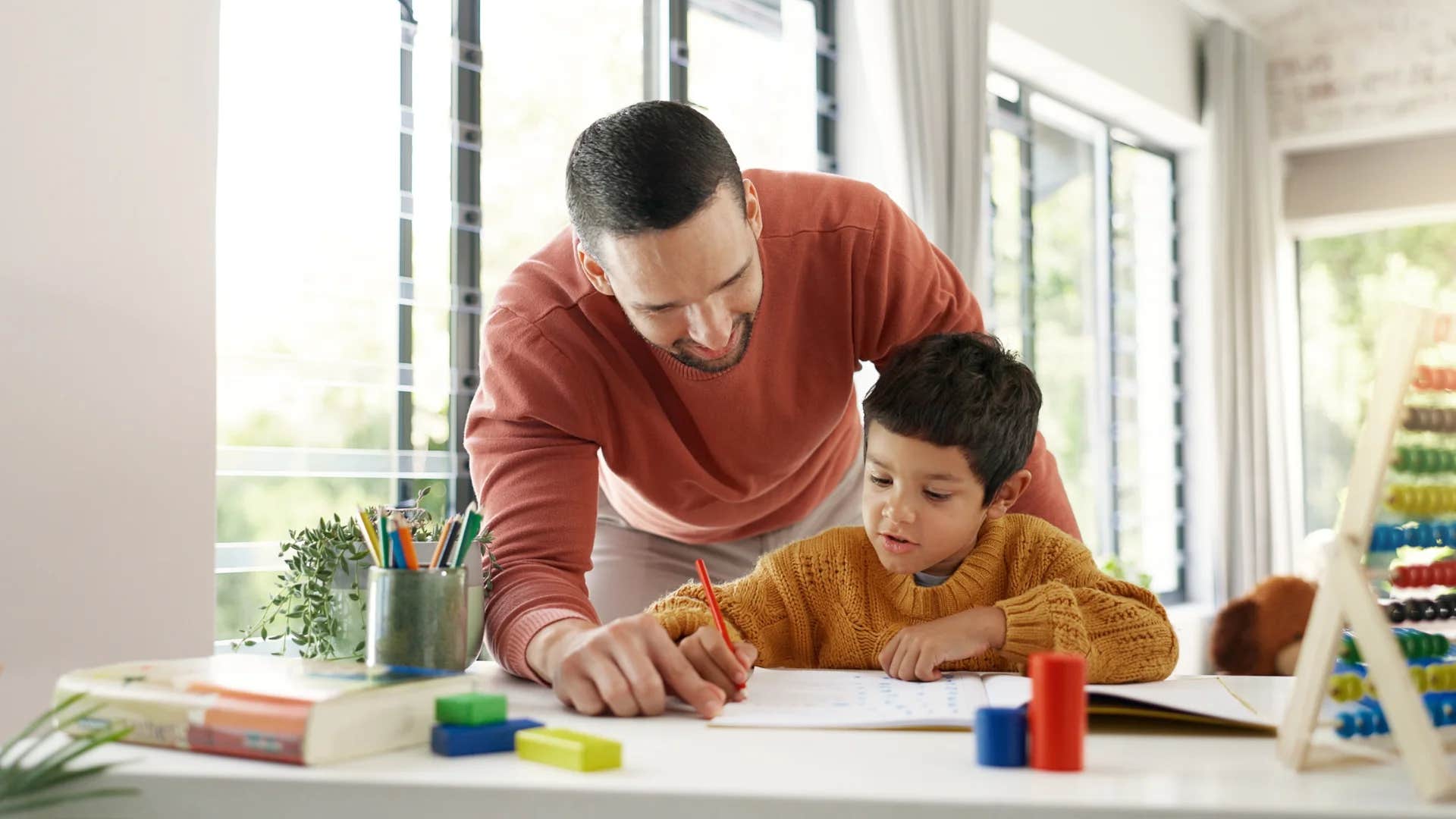
Few things annoy a good teacher more than parents insisting that their child is special or better than the others in some way. Everyone has unique strengths to bring to the table, and everyone is special, with no one kid more so than another. Still, parents refuse to accept that their child is anything less than the classroom prodigy.
Currently, the U.S. Department of Education believes that 6% of students enrolled in public school are part of gifted and talented programs. According to the Hechinger Report, up to 3.6 million students may be labeled as gifted but aren't. While 6% doesn't seem like a huge portion of students, several million is still certainly a lot.
When parents imply that their kid is the only special one in class and deserves different treatment because of it, they overlook the talents of the other students in that classroom. They also imply that their kid deserves more attention from the teacher than they're currently getting, even though the teacher is likely aware of the student's strengths.
2. 'The last teacher did things differently'
 Nicoleta Ionescu | Shutterstock
Students and teachers can develop a really special bond over the course of a school year. If a child reacted well to one teacher and their teaching style, it can be hard to move on to someone else. Each teacher has their own way of doing things, and some won't click with certain students as well as others do. Parents may take this the wrong way and comment that the current teacher isn't doing things as well as the previous one.
According to a study from NYU Steinhardt, "Effective teaching is concerned with the student as a person and with his general development. The teacher must recognize individual differences among his/her students and adjust instructions that best suit the learners." In this sense, teachers are responsible for adapting different teaching styles to students. However, that doesn't mean it should be their entire focus.
If a teacher spent all of their time working individually with each student, they would never get anything done. If a student needs help beyond what happens in the classroom, parents have to step in and take responsibility for that as well. They are part of their child's education, too.
3. 'My child never misbehaves'
 PeopleImages.com - Yuri A | Shutterstock
If a student misbehaves in school, it's common for the teacher to reach out to their parents and ask for backup. They may not be quick to give it, though. Some parents may claim that their children are perfect little angels who never do anything wrong, and nothing will sway them in that belief.
Director of the Child Mind Institute, Caroline Miller, noted that classrooms almost always have disruptive students. Some will follow their lead, while others will be distracted by their behavior. "It doesn't take many to seriously detract from the opportunity teachers have to actually teach," she said.
If a teacher reaches out to parents for help with their child's behavior and doesn't get that help, their entire classroom could suffer. Valuable instruction time will be stolen from other students as well. As one of the phrases parents say that instantly annoys every good teacher, there's nothing more frustrating than parents who don't want to help their child.
4. 'I don't agree with how you are doing this'
 Pixel-Shot | Shutterstock
Some parents are overly involved in their children's education and want to micromanage every aspect. They pay close attention to what the teacher does in the classroom and criticize it whenever they can. Teachers are somewhat like substitute parents during the day, and help students with many important things. But that doesn't give their parents the right to argue with how they handle their class.
Mark Phillips, a teacher and educational journalist, said, "It's important that parents understand they can't control what happens in class and that the classroom is the domain of the teacher. Similarly, teachers have to let go of any notion that they can control what happens in a student's home. What each can do, however, is listen carefully to see if they can learn something from the other about what could improve things for the student in either of those settings."
Parents can't take over for teachers in the classroom, no matter how badly they might want to. There has to be a certain level of trust there as they allow their child's teacher to do their job. Without that, parents could end up saying some pretty hurtful things.
5. 'My child is so smart'
 Alexander_Safonov | Shutterstock
A parent could become critical if they feel like their child has always done well academically and excelled in school, but something has changed this school year. Their first instinct would likely be to blame the teacher, who they would annoy with their comments. They may believe the teacher is doing something wrong that set the student up for failure.
Jeanne Huybrechts, chief academic officer at Stratford Schools, explained that it is concerning when children known for doing well begin to struggle in school, and parents should respond. However, as she also pointed out, "Parents should expect that their child's teachers, who have similar aspirations and expectations for their child, will partner with them in this endeavor."
Parents and teachers are meant to collaborate, not clash. If a parent feels like their child is not living up to their potential, that is a problem that should be addressed. However, they can't do so combatively or on their own. They need the teacher's help, not annoyance.
6. 'You must not have taught it correctly'
 wavebreakmedia | Shutterstock
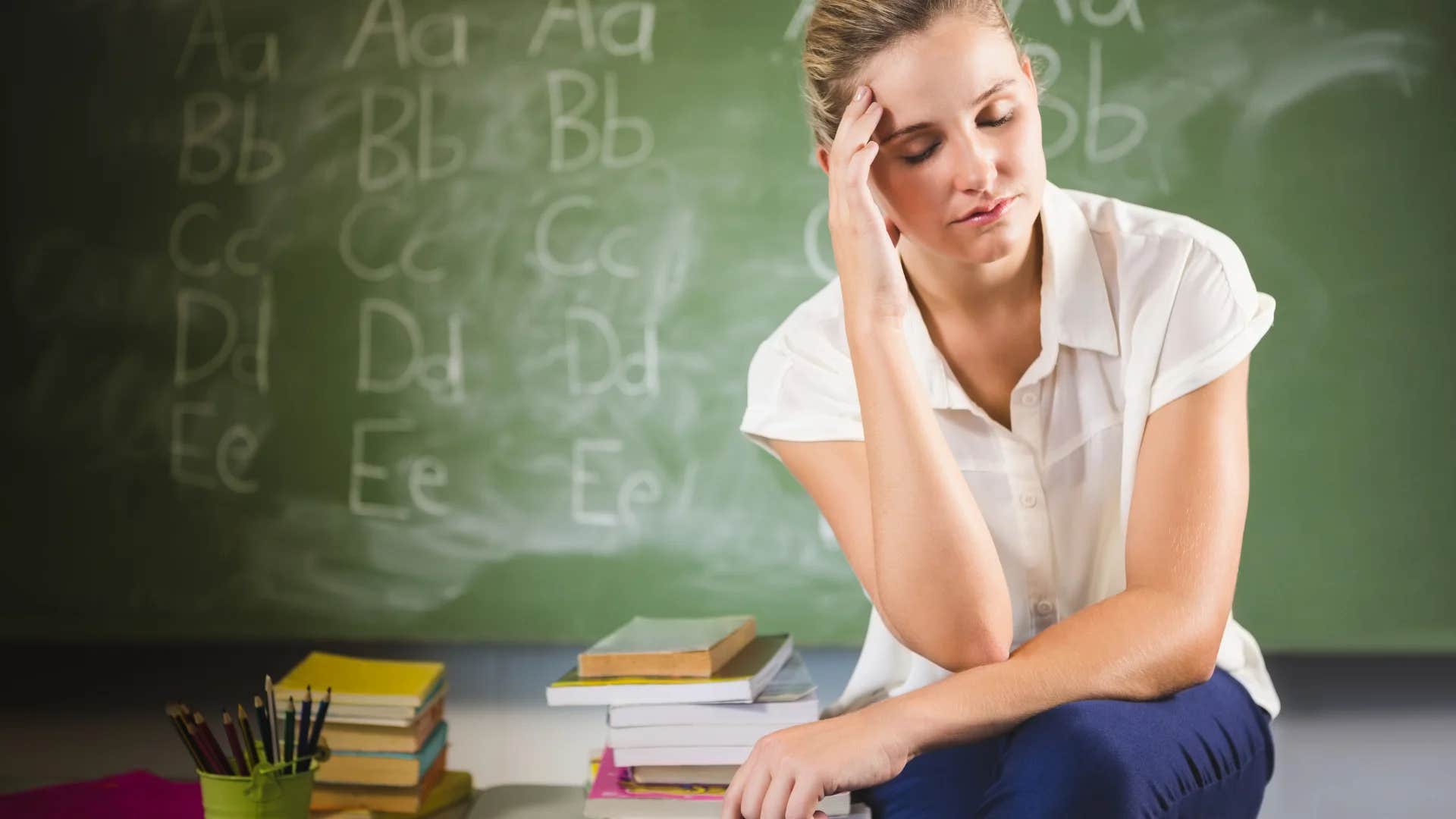
Teachers are used to parents micromanaging their lesson plans, as shown by a phrase that instantly annoys every good teacher: telling them they haven't taught something properly.
If a student struggles to grasp a concept or subject, parents may blame the teacher instead of considering their child's lack of understanding. Parents may even claim that the teacher doesn't know the subject well. All of this would be greatly annoying for any teacher.
ERIC Clearinghouse on Elementary and Early Childhood Education pointed out that parents and teachers should work together for the child's benefit. "It is important for teachers and parents to remember that they know the child in different contexts, and that each may be unaware of what the child is like in the other context," they said. "It is also important for teachers and parents to remember that the foundation for good parent-teacher relationships is frequent and open communication and that both teachers and parents share the responsibility for creating such a foundation."
Instead of petty squabbles, parents should support teachers' efforts and give them the help they need. Criticizing a teacher for not doing a good job doesn't help anyone in this situation. It's important to understand teachers and the essential work they do.
7. 'My child was telling the truth'
 Bangkok Click Studio | Shutterstock
Although they're unfortunate, fights at school are relatively commonplace. It's easy to end up in a situation where one student says one thing while another has an entirely different story. In these cases, parents are most likely to believe their own child, regardless of who was really telling the truth. But the teacher almost certainly knows what really happened, and they would be understandably annoyed if a parent tried to challenge their version of events.
Journalist and educator Dana Brown said, "Before becoming angry, yelling or calling the principal, allow teachers to explain possible miscommunications. After all, what you heard from your five-year-old may not be the most accurate description of the situation." Parents should remember that teachers are the adults in the room and control the situation. And if they need help, they know how to access it. They don't need parents accusing them of lying on top of everything else they're already dealing with.
8. 'You need to change that grade'
 Krakenimages.com | Shutterstock
If a student gets a bad grade, it is very likely their own fault. Maybe they didn't understand the concept in the first place, or perhaps they neglected to study. Whatever the case, bad grades happen, and teachers assign them fairly. Parents may not agree, though. If their child gets a bad grade, they may demand the teacher change it, even if it was rightfully earned.
The teacher may have noticed the low grade before the parents did, and instead of arguing over who is to blame, they can work together to help the child do better in the future. Parenting and education expert Gigi Schweikert said, "It's important for parents to voice the problems that the child may be facing to their teachers. This is something the teacher may already be trying to address in the classroom, and together, the parents and teacher can create a plan so the child can succeed." Collaborating is always a better choice than tearing a teacher down.
9. 'My child can't sit next to them'
 Drazen Zigic | Shutterstock
Parents may prefer who their child sits next to in class. Some may prefer that they sit next to a friend or a child whose family they know, while others may want them to sit next to well-behaved students who excel academically and away from troublemakers. But the teacher likely has a seating chart that already assigns the student to a certain spot.
Of course, this is just a teacher doing their job. But if a parent doesn't like it, they may make that point known. According to Brown, "Yes, parents should absolutely have a say in their child's education, but those choices should be made during elections and school board meetings. Parents should not place daily demands on teachers for every lesson and activity."
Parents cannot expect teachers to change every little thing just for their child, but they often do. This sets a dangerous precedent, as others will come to expect the same thing. Teachers know this and are understandably annoyed when a parent asks them to switch up a seating arrangement.
10. 'You're not disciplining correctly'
 Rocketclips, Inc. | Shutterstock
Parents may make annoying remarks about how a teacher handles discipline in their classroom. They may feel their child is being unfairly targeted while other students aren't being called out as much, or that the teacher is too strict or mean. Instead of trying to understand where the teacher is coming from, parents may choose to gripe about it, which isn't beneficial at all.
Parenting writer Stephanie Dolgoff shared that a student may talk about their teacher in a way that makes their parents think the teacher doesn't like them, but that's not necessarily true. She reminded parents that their child's side of the story could have "some missing context," and they may need more information before reaching a conclusion.
While how their child is disciplined is absolutely a parent's business, they also have to trust their child's teacher and remember that the teacher knows what's best while they're at school. Unless there is a serious problem, the teacher probably knows what they're doing and is acting appropriately.
11. 'My child shouldn't have to follow that rule'
 Andrew Angelov | Shutterstock
Perhaps one of the most frustrating phrases parents say, and one that instantly annoys every good teacher, is this sentence: it's just another way for parents to feel justified in believing their child is superior. If a parent feels like a certain rule is too strict or unfairly targets their child, they may make their opinion known, annoying the teacher.
The parent may feel the rule makes school more difficult for their child, or that their child won't want to go to school because of it. These are reasons parents might push back when the teacher tries to implement that rule.
Michael Linsin, creator of Smart Classroom Management, revealed, "Now, it's important to mention that parents who complain about accountability are often just frustrated that everything isn't going as swimmingly for their child as they'd like... They become so attached to their own vision of their child's success that they advocate letting them off the hook or giving them additional chances."
In other words, parents may not be completely against the rule their child has to follow, but they may be more upset by the consequences of not following through. If they worry the rule will be broken too easily, then they are more likely to become annoying and critical of the teacher. That's certainly not fair.
Mary-Faith Martinez is a writer with a bachelor's degree in English and Journalism who covers news, psychology, lifestyle, and human interest topics.

