
11 Difficult Childhood Experiences That Turn The Brightest Kids Into Quite Anxious Adults
 Anatoliy Karlyuk | Shutterstock
Before they can protect themselves, so many kids are set up to fail in the face of childhood trauma. On top of emotional harm and social issues, kids with childhood trauma may also face all kinds of physical and biological consequences, including poor metabolic health and behavior issues.
So, even if talking and sharing about trauma is more normalized today, that doesn't mean the outcomes go away. In fact, there are all kinds of difficult childhood experiences that turn the brightest kids into quite anxious adults, even if they've come far in healing their past wounds.
Here are 11 difficult childhood experiences that turn the brightest kids into quite anxious adults
1. Having hyper-critical parents
 YAKOBCHUK VIACHESLAV | Shutterstock
Critical parents make children feel like they're not deserving of love or praise unless they have something to offer. While that looks different for every family, many adult kids who were criticized constantly at home reflect on being afraid to make mistakes. Even though there are benefits to having high standards, when they feel fueled by criticism, they create unnecessary stress.
These kids grow up with self-worth that's inherently tied to their outcomes and success, which quickly spirals into burnout and chronic stress in adulthood.
2. Pressure to be a 'perfect' child
 MAYA LAB | Shutterstock
Especially for older siblings or the "perfect" kids who were held to completely unrealistic standards, they always feel like the weight of the world is on their shoulders. Their trauma might not have felt malicious or scary in the moment, but they slowly curated a baseline of anxiety from pushing their needs to the side and taking care of everyone else.
Parentification, where kids are forced to be mature at young ages, is historically associated with worsened mental health outcomes. Even after they've grown up and moved out, adult children still find themselves coping with similar levels of emotional distress, feeling completely isolated without help or support from anyone.
3. Growing up in a chaotic environment
 WESTOCK PRODUCTIONS | Shutterstock
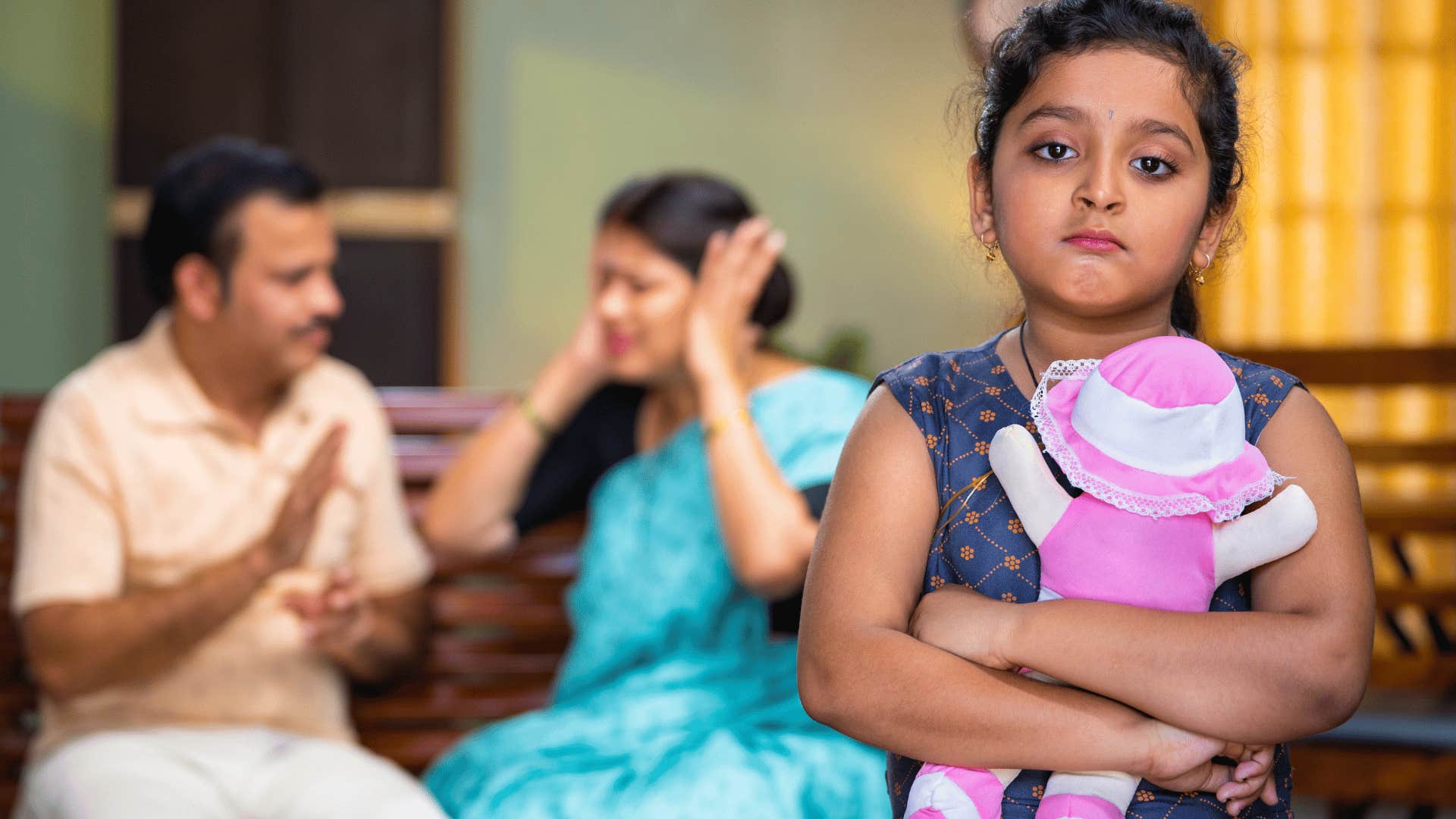
Even if it's not talked about very often, people with generalized anxiety disorders almost always develop these high levels of worry and stress from unpredictable environments in childhood. They learn early on that in order to protect themselves, they have to make themselves smaller and put their emotional needs aside to comfort others.
Especially for emotionally attuned, incredibly sensitive kids, this kind of chaos, whether it's literal noises or emotional neglect, can be even more overstimulating.
4. Facing money stress and poverty
 Kyrylo Ryzhov | Shutterstock
It's relatively well-researched that kids living in poverty at a young age have higher levels of mental health disorders and struggles than those in more financially secure homes and environments. Even at early ages, differences in brain development can often be chalked up to a family's socioeconomic status.
From listening to parents fight about money to feeling like an outsider for not having the best toys, and even facing food insecurity at home, there are all kinds of nuanced struggles that low-income kids face that define their lives. Of course, they're more likely to deal with the same issues in adulthood, but even if they don't, that sense of uncertainty and anxiety lingers.
5. Being the 'gifted' kid
 Denis---S | Shutterstock
Despite being praised often at school and at home, gifted children with high special abilities and intelligence are often at a higher risk of developing mental health issues over time. Not only are they often pressured to prove their intelligence, but they're held to unrealistic standards and forced to mature much earlier than their peers.
They feel like they can't make mistakes or ask for help without undermining this essential part of their identity, and that anxiety doesn't go away, even as adults.
6. Taking care of a parent
 pikselstock | Shutterstock
While autonomy for kids is incredibly important in development and for confidence, especially when they're playing outside or in non-threatening environments, when kids are forced to mature early, it undermines their development. They might become hyper-independent, but they're also holding an unrealistic amount of expectations that spark chronic anxiety.
They're expected to be the mature ones at home, taking care of parents or people-pleasing to protect the peace. They end up as anxious adults who avoid relationships and struggle to trust people, because they're used to carrying it all.
7. Feeling 'different' or rejected by other kids
 Inside Creative House | Shutterstock
On top of anxiety and depression, kids who experience social withdrawal and isolation in their most impressionable seasons of life are also at risk for all kinds of emotional, social, educational, and physical consequences, according to a 2013 study.
Many of us overlook the true value and meaning of belonging as a human need because we have great friendships and connections. However, when kids grow up believing that they're not worthy of attention or love, they have all kinds of self-esteem issues that negatively affect their development.
8. Living with adults who fought constantly
 KlingSup | Shutterstock
According to a study from Development and Psychopathology, kids who grow up with parents who argue and fight all the time at home tend to be at a higher risk for mental health problems like anxiety and depression. Especially when their parents never resolved conflict, but weaponized it against one another and expected their kids to mediate, anxiety blooms.
It's not a fleeting kind of nervousness either. These kids grow up with insecure attachments in relationships and avoidant mechanisms to run from conflict, all because it shaped their childhood experience in scary ways.
9. Unexpected grief and change
 DREAM INSPIRATION | Shutterstock
Many kids who dealt with a million different kinds of trauma and loss at very young ages are used to experiencing the worst. So, their brains are wired to consider the worst-case scenarios and always worry about what can go wrong. Their lives are evidence that things often take a turn for the worse. They're a constant reminder that change and uncertainty are bad things, even when that's not always the case.
This also means that they're more likely to expect the worst about small things, like getting a stomachache or noticing a piece of clothing out of place. They flood their lives with stress all the time, even when it's not necessary.
10. Being gaslit by parents
 Iryna Inshyna | Shutterstock
Gaslighting is a manipulative tactic intended to make people feel crazy. Typically used by people who want a sense of control over others, toxic parents use gaslighting practices with their kids. They pressure their kids to do what they say, when they say it, without ever offering space for them to ask for help or speak vulnerably.
Especially considering that traumatic experiences tend to hide in the brain and unknowingly cause all kinds of mental health issues when left unaddressed, these adult children are more anxious. They were taught by parents to suppress their needs and ignore their emotions, and as adults, they're still unwinding it all.
11. Parental separations and divorce
 Dorde Krstic | Shutterstock
According to a World Psychiatry journal study, parental separation and divorce can sometimes affect childhood adjustment experiences and prompt mental health struggles. Of course, divorce is sometimes inevitable and necessary, compared to staying in a toxic relationship with children, but that doesn't necessarily mean it doesn't have consequences.
From stirring up struggles with attachment in adult relationships to fearing rejection, many adult children end up coping with the separation of their parents for years to come, even when it felt healthy or harmless at the time.
Zayda Slabbekoorn is a senior editorial strategist with a bachelor's degree in social relations & policy and gender studies who focuses on psychology, relationships, self-help, and human interest stories.

