
Boomer Kids Had 8 Common Sense Skills Down By Age 12 That Most People Today Still Can't Do
 Filippo Carlott | Shutterstock
The life lessons boomers experienced are evidence that they grew up in a totally different world. They were often left to their own devices and navigated complicated social norms, so almost nothing is the same as what younger people go through today.
That's why it's not surprising that boomer kids often had many common sense skills by age 12 that are basically non-existent or impossible for kids today to figure out. There's a knowledge gap, but also a stark difference in experience.
Most people don't have these common sense skills that boomer kids had down by age 12
1. Sewing their own clothes
 Olga Apanasenko | Shutterstock
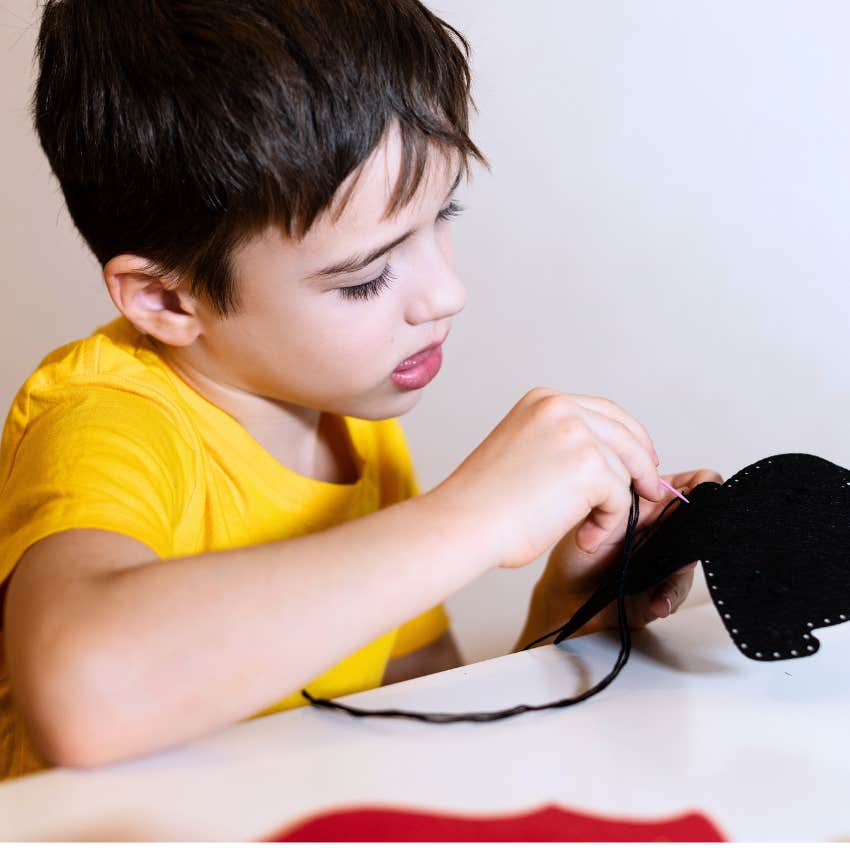
Many boomer kids grew up in homes where things were fixed before they were replaced, both out of necessity and frugality. They learned to sew buttons back onto collared shirts and repair rips in fabric, usually before they got a driver's license or entered high school.
They likely had parents who taught them how to sew from scratch, making this a foundational habit that is rarely seen among kids today in our consumerist society.
2. Reading physical maps
Most people today rely entirely on their phones to get where they need to go, whether they're making a trip to the grocery store or going on a road trip. The days of making kids read a physical map in the passenger seat or printing out directions are almost entirely over, at least for younger generations.
However, reading physical maps, whether it was in school or in the car with parents, was a common thread in boomer kids' childhoods. They had no choice but to learn, because cell phones, the internet, and even GPS systems weren't yet available to make life easier.
3. Writing in cursive
Despite being a great aid to learning and a foundational skill, most kids today aren't learning how to write in cursive. They might learn to sign their name in school, but cursive doesn't have any space in typical curricula anymore.
For boomers, it was something they learned before turning 12. They had to read their parents' cursive handwriting and do it themselves in school. For most, it's still how they write by hand today, even if their younger co-workers and grandkids can't read it.
4. Using a phone book
Today, contacts saved on cell phones have completely changed how people stay in touch. Not only do they not have to worry about memorizing anyone's phone numbers, but they can use Google to search new ones, instead of needing to flip through a phone book to find the right one.
It was a practice in patience and an essential skill for boomer kids, but today, most don't even know what a phone book or operator is.
5. Ironing clothes
 Zulfiska | Shutterstock
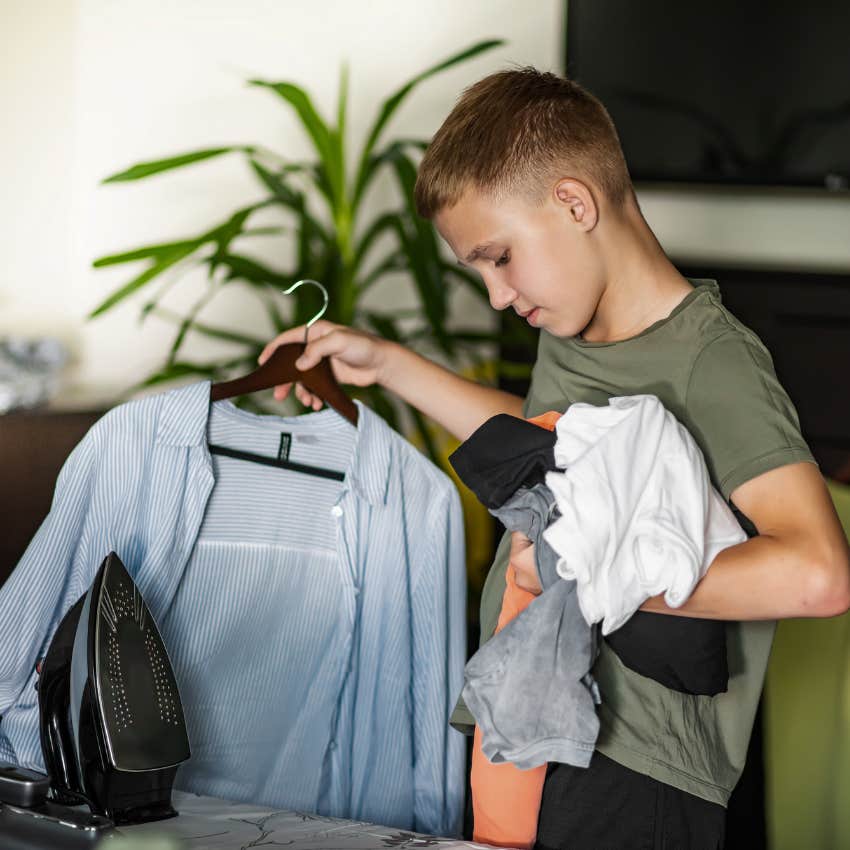
Doing laundry and needing to iron clothes was a regular part of older generations' childhoods, considering they were often responsible for the majority of household labor at home. They learned these practical skills because they had to, and often without a lot of parental guidance.
While parents today outsource labor to save time and leave the chores with safety concerns for adults, children end up having to learn these basic skills when they're adults. For some, ironing never comes into the picture and they end up wearing wrinkled clothes or trying to learn the new skill without much success.
6. Writing and addressing a letter
Writing and addressing letters in today's digital age is quietly going away. Despite being a classic habit and part of boomers' lives before they became preteens, with young kids a text message or an email feels far more useful to learn.
In adulthood, these kinds of skills and the ability to write expressively through letters continue to add to boomers' quality of life and well-being. According to a 2017 study, exchanging letters across generations can also mend some of the tensions and divides we're facing.
Addressing letters might not be a commonplace habit anymore or a skill taught in school, but there's still value in it.
7. Driving a manual transmission
On top of being in cars without seatbelts and being expected to drive before turning 16, many boomers learned how to drive manual transmissions. Compared to kids today, many of whom don't even care to get their driver's license at all, it's an almost completely lost skill.
Plenty of boomers are keeping it alive and sometimes passing it down to their own adult children, but automatic has taken over. For them, it was a part of daily life and a pillar of common sense, but today it's confusing and unnecessary.
8. Doing mental math
 Natalia Lebedinskaia | Shutterstock
With access to technology and convenient workarounds, younger generations today are less cognitively capable than boomer kids at the same age. Not only are they struggling with critical thinking and original thought thanks to AI, but many can't even do basic mental math without counting on their fingers or using a calculator.
Boomer kids learned how to do math in their heads and actually retained it. For most of their lives, they had no other option. There was no going online to search for an answer or using a calculator on their phone. They practiced over and over again, which is why they still have the skill today.
Zayda Slabbekoorn is a senior editorial strategist with a bachelor's degree in social relations & policy and gender studies who focuses on psychology, relationships, self-help, and human interest stories.

